
Co-production · Paiwand / ESRC
Mental Health Guide for Afghan Sanctuary Seekers
“Mental health professionals working with Afghan sanctuary seekers often do so without accessible, community-informed guidance.”
The challenge
Clinical practice disconnected from community knowledge
Psychologists and psychiatrists working with Afghan sanctuary seekers in the UK had limited access to culturally informed, practically useful guidance. Existing resources were either too academic to be applied in clinical settings, or failed to reflect the perspectives and knowledge of Afghan communities.
What was needed was something that brought both together - synthesising the research evidence and the community knowledge into a resource that practitioners could actually use.
What we did
Combining academic evidence with Afghan community knowledge
Funded by the Economic and Social Research Council (ESRC), this project brought together two bodies of knowledge that rarely meet: the academic literature on Afghan mental health and asylum, and the practical expertise held within Afghan community organisations.
The process involved:
- A structured review of academic and grey literature
- Partnership with Afghan community organisations - Paiwand, the Afghan Academy and the Association of Afghan Health Professionals UK - who sat on the advisory board throughout
- Recruitment of a lived experience researcher, ensuring Afghan perspectives shaped the work from the inside
- A stakeholder consensus meeting bringing practitioners and community representatives together to validate and refine the guide
What changed
A guide now used in NHS Trusts across England and Wales
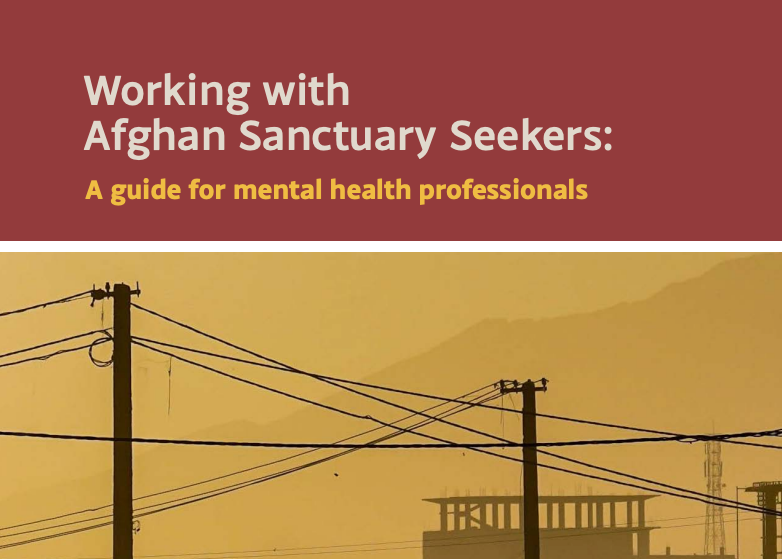
The project produced a practical guide for mental health professionals - psychologists and psychiatrists - working with Afghan sanctuary seekers. The guide synthesises the evidence base and community knowledge into accessible, clinically applicable recommendations.
A training programme developed from the guide has been delivered in NHS Trusts in England and Wales.